A white tern with a black top of its head is pictured flying left-to-right, with its wings stretched out in front and its head tilted slightly down, as if scanning the ground below.

The Question for an Organizer Is What the Wing Is for a Bird

[This post is part of a series on 1-on-1 organizing conversations.]

“You can get all your ideas across just by asking questions, and at the same time you help people to grow and not form a dependency on you. To me it’s just a more successful way of getting ideas across.” – Myles Horton in conversation with Paolo Freire in the book We Make the Road by Walking.

Myles Horton co-founded the Highlander Folk School in Tennessee in 1932 and developed a model of popular education that played an important role in stimulating the bottom-up leadership of both the 1930s labor movement and the 1960s civil rights movement. Horton paid close attention to crafting and wielding questions as an essential tool of grassroots organizing.

Continue reading
Talking to Your Coworkers about Socialism

[This post is part of a series on 1-on-1 organizing conversations.]

As socialists we spend most of our time talking about socialism with other socialists, whether in our radical book groups or with our activist friends. When it comes time to talk to non-socialists about socialism, we often stumble as we apply our activist-talk to our neighbors and coworkers who aren’t part of the radical scene. Rather, we should adapt our conversational strategies to the needs of the current context and moment.

Continue reading

How Social Conditions and Personal Experience Shape Political Conversation

[This post is part of a series on 1-on-1 organizing conversations.]

There’s a hard pill to swallow for people who first get interested in radical politics: No one cares what you think. “Oh, so you don’t like white supremacy, capitalism, and patriarchy?” For the most part, nobody cares.

I’ve seen countless instances of someone expressing a radical belief to others with the hope of being agreed with or at least sparking an engaging discussion. But most commonly we are met with blank stares and utter disinterest, and we falsely take this as evidence that nobody cares about social issues or that there’s nothing we can do to change people’s minds.

Continue reading

The Anatomy of Organizing, Part II

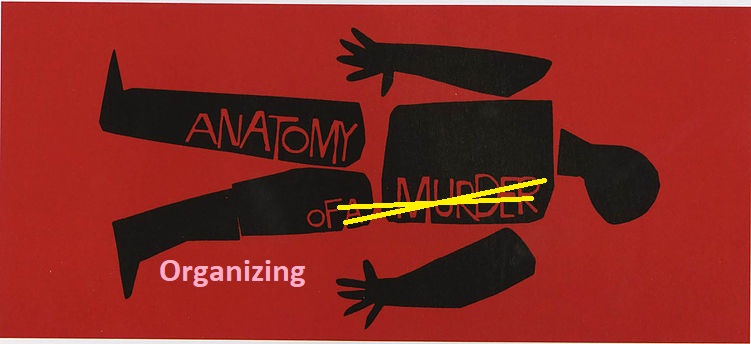
Anatomy of Organizing image

(See Part I here.)

——

Great organizing is as rare as it is complex. To get all the parts operating at their best in a constantly changing environment against dominant social norms, thick wallets, and the combined state forces of politicians, courts, and the police is as at least as remarkable as humanity’s other great achievements.

In Part I, I covered the defining bare essentials of organizing: outreach and skills development, democracy, and direct action. Here, I cover a set of secondary organizing features that nonetheless are indispensable to great organizing.

Continue reading