

[For more of my posts on anarchism visit this page. An abbreviated pamphlet version of this post is available for download and printing here. A computer voice reading of the blog post can be listened to in the player below.]
Why should we think about anarchist unionism?
Since the fall of the Soviet Union and the push towards capitalist reforms in China, self-proclaimed Communist movements the world over have lost their main sponsors and sources of political inspiration and legitimacy. Subsequently, since the early 1990s anarchism has seen a resurgence within social movements in the US. Some movements, like the early anti-globalization movement and Occupy Wall Street, have more foregrounded anarchist ideas, while all social movements have been touched by an increased number of anarchists within them, such as the abolitionist wing of the Black Lives Matter movement.
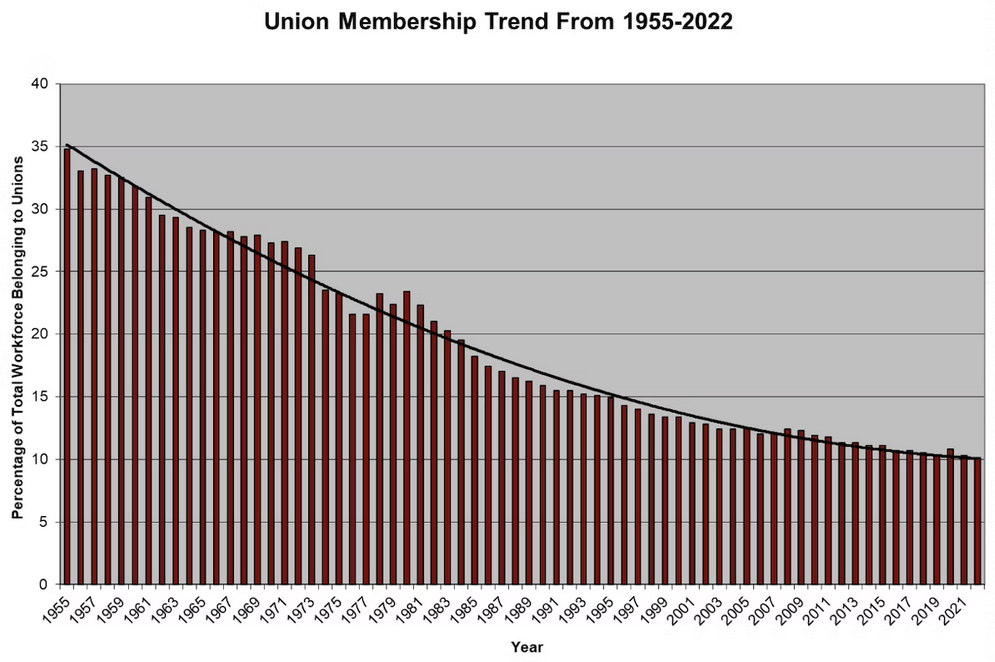
The labor movement has long been a central part of social movements in the US, sometimes radical and sometimes not, but always touching the lives of millions of people and putting them into varying degrees of action for reform and occasionally towards revolution. While the US labor movement is at a historical nadir in terms of union membership density, the last decade has seen a broad uptick in strike activity and public support.
With this modest resurgence of both anarchism and union organizing, it’s strange that there’s very little overlap between the anarchist movement and the labor movement in the US today. There are very few anarchist-led organizations or prominent anarchists working within the labor movement, and the labor movement has very few prominent leaders or groupings of its own that identify with anarchism.
From a historical vantage point this is unusual. In the early 20th century anarchism was at times the dominant leftist pole within the international labor movement, with anarchist-led labor federations claiming tens or hundreds of thousands of members and leading large strikes in countries on five continents. However, the repression and precipitous decline of anarchism as an international social movement from the 1930s – 1980s overlapped considerably with the successful assault on the labor movement in the US (and to a lesser degree in other countries) from the late 1940s – 2000s. These movements shriveled up and became increasingly isolated from each other over the second half of the 20th century.
Continue reading
 Fire with Fire